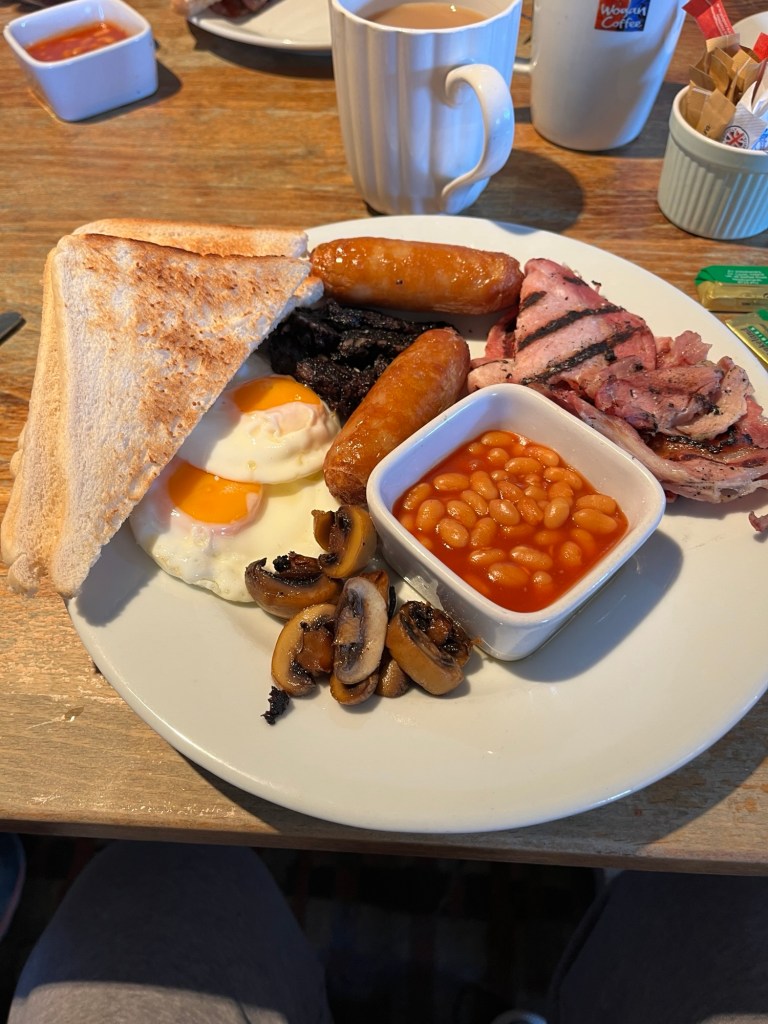
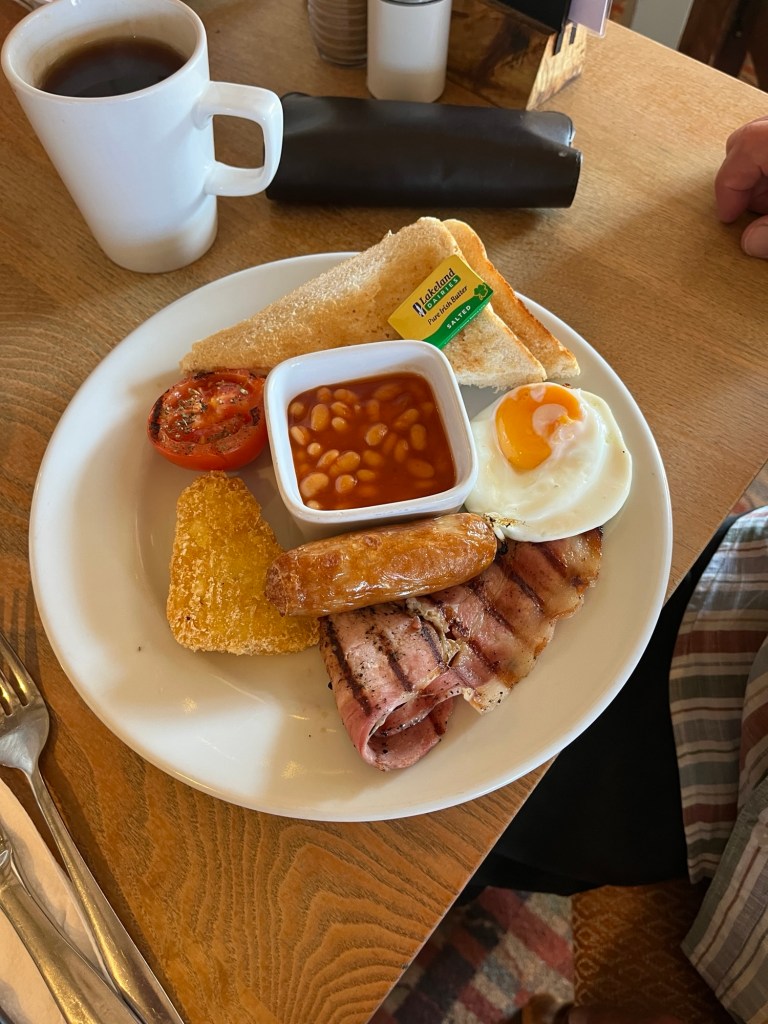
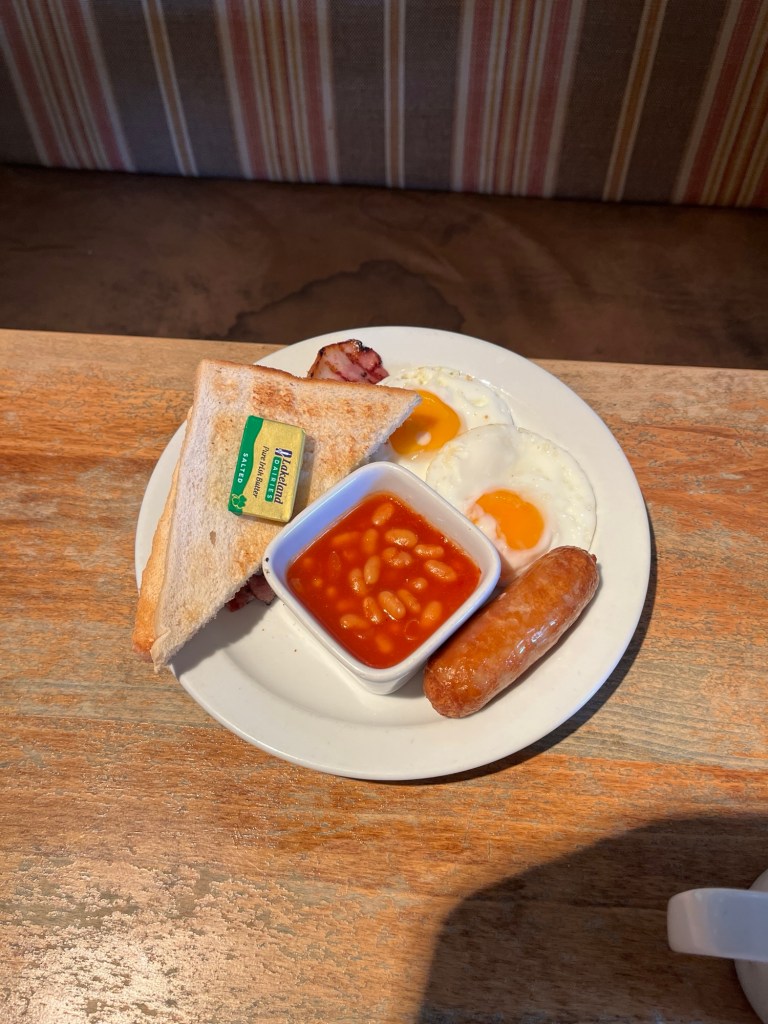
In the morning weekday rush, any breakfast will suffice. A bowl of cereal, buttered toast, yogurt with granola—maybe avocado toast, if you’re feeling fancy. But when there’s time for something heartier, nothing satisfies like the classic American breakfast plate, soothing for both stomach and soul. No matter where you get the meal—at home, a diner, a local brunch spot—it’s pleasingly consistent in form and price: eggs, toast, potatoes, and some kind of salty, reddish meat, with orange juice and coffee on the side. Pancakes, if you’re really hungry. If you’re craving a filling, greasy, and relatively cheap meal, look no further than an all-American breakfast.
The classic breakfast hasn’t changed in roughly a century. A Los Angeles breakfast menu from the 1930s closely resembles that of my neighborhood greasy spoon in New York; diners from Pittsburgh to Portland offer up pretty much the same plate. The meal’s long-lived uniformity—so rare as food habits have moved from meatloaf and Jell-O cake to banh mi and panettone—was made possible by abundance: Each of its ingredients has long been accessible and affordable in the United States.
But lately, breakfast diehards like me have noticed a troubling change. At my neighborhood diner, a breakfast plate that cost $11.50 in 2020 now costs $14—and it isn’t just because of inflation. Although all kinds of food have gotten more expensive in recent years, traditional breakfast has had a particularly rough go of it. The cost of eggs has soared; supply shortages have driven coffee and orange-juice prices to historic highs. And that’s not even taking President Donald Trump’s tariffs into account. “Milk, sausage, certainly not coffee—these things are not going to get cheaper,” Jason Miller, a supply-chain-management professor at Michigan State University who researches the impact of tariffs, told me. The stream of staples that have made American breakfast so cheap for so long is now starting to sputter.
Breakfast can symbolize an entire nation: the full English, the French omelet, Belgian waffles. In many ways, America’s plate chronicles the nation’s history. Reverence for bacon and eggs was partly inherited from the English; a vigorous public-relations campaign later cemented its popularity. In the 18th century, the Boston Tea Party helped tip the nation permanently toward coffee, and Scotch-Irish settlers kick-started American potato growing in New Hampshire. With the Industrial Revolution, access to these and other breakfast foods exploded: Bacon was packed onto trains carrying mass-produced eggs, milk, and potatoes across the country. In 1945, the invention of frozen concentrated orange juice gave all Americans a taste of Florida.
But if breakfast was once a story of American innovation and plenty, it is now something different. No food captures the changes better than eggs. Since 2023, bird flu has wiped out henhouses, leading to egg shortages that have intermittently made buying a carton eye-wateringly expensive. Profiteering in the egg industry may also be keeping prices high: “When there are these horrible bird-flu outbreaks, the producers are actually making a lot more profit,” Miller said. After peaking at more than $8 for a dozen in February, the wholesale cost of eggs has come down, but a carton still costs double what it did at the start of 2020.
Ordering eggs at a restaurant will put even more of a dent in your wallet. Earlier this year, the breakfast chain Waffle House imposed a temporary 50-cent “egg surcharge,” and Denny’s followed suit with a surcharge that varies by region. (Denny’s and Waffle House did not respond to a request for comment.) At restaurants, the price of eggs probably won’t return to pre-bird-flu levels anytime soon, even when outbreaks subside. “In general, stuff tends to not get cheaper,” Miller said. And any reprieve from egg shortages is likely to be short-lived: Scientists predict that bird-flu outbreaks will return year after year, unless the virus is brought under control. Until that changes, the tradition of centering eggs in the morning meal will be costly to uphold.
Another factor endangering the classic breakfast is climate change. The global coffee supply has fallen precipitously because of extreme weather in Brazil and Vietnam, which together produce more than half the world’s beans. Since January 2020, the shortages have driven up the retail price of ground coffee by 75 percent. So far, coffee importers have shouldered most of the rising costs to shield consumers, but “eventually something has to give,” Miller said. Orange juice is likewise drying up. As I wrote in February, all-American orange juice barely exists anymore because Florida’s citrus production has plummeted 92 percent in the past two decades. The spread of an incurable disease and a spate of grove-destroying hurricanes have forced juice companies to rely heavily on oranges imported from Brazil and Mexico. Climate change has also messed with the supply of non-breakfast food, such as chocolate, but it has particularly hammered our morning routines. Even add-ons to the classic breakfast, such as bananas and blueberries, have been in short supply because of extreme weather.
And now the syrup on the pancake: Trump’s trade war is poised to make matters worse. The current 10 percent tariff on most imported goods is just a preview of what could come this summer, if the president’s wider reciprocal tariffs take effect. You can’t exactly grow coffee in Iowa; most of America’s supply is imported from Latin America, and the rest from Vietnam, which could face a 46 percent tariff. Eggs and orange juice are easy to think of as all-American products, but imports have shored up our supply. The Trump administration has turned to Turkey and South Korea to help keep eggs in stock at your grocery store, but bringing over those cartons might soon be subject to steep tariffs.
Even potatoes aren’t immune. Though spuds are the most widely producedvegetable in the U.S., Americans love them so much that the country has become a net importer of them: Canada alone provided $375 million worth of potatoes in 2024. All of those potatoes need to be cooked somehow—often, in canola oil also produced in Canada. Most Canadian foods are exempt from tariffs for now, but considering Trump’s ongoing feud with our northern neighbor, taxes seem like only a matter of time. Even if you don’t eat the classic American breakfast, tariffs are likely coming for your morning meal: Bananas, avocados, berries, maple syrup, and lox, among other foods, are at risk of price increases from tariffs.
Some elements of the breakfast plate are safe—for now. America is a grain-producing powerhouse, so foods such as toast, pancakes, and waffles aren’t expected to become wildly pricey. Bacon and sausage will probably be fine too; if China stops importing U.S. pork as a result of the trade war, there will be an even bigger supply at home, Miller said. A tariff-ridden future could shift more homegrown foods onto the breakfast plate: sausage and pancakes, ham and toast, with a glass of milk to wash it down. Of course, people eat plenty of other foods for breakfast, and these alternatives may just become more popular: Greek yogurt, oatmeal, cereal. Still, a crucial part of breakfast that can’t be overlooked is the cookware used to make it. The majority of America’s toasters, microwaves, coffee makers, juicers, and pans come from China, which currently faces a 145 percent tariff.
Yes, seemingly everything has become more expensive in recent years, and tariffs risk raising the cost of many goods. But it hurts most when higher prices affect the things we count on to be inexpensive. The defining characteristic of the American breakfast is not bacon and eggs, or toast or coffee, but its affordability. Diners proliferated near factories because working-class people knew they could fill up on a classic plate after an overnight shift without fretting about the cost. Now stepping out for a diner breakfast can require a level of budgeting once reserved for fancy brunch.
Whether or not a trade war escalates, the notion of the classic American breakfast is in peril—as is the vision of the nation it once symbolized. The forces affecting orange juice, coffee, and eggs are far harder to control than economic hostility. For the time being, eggs, bacon, and all of the other foods that make up the American breakfast are still available. But if the plate is no longer cheap, it just won’t be the same.
Copied from