I know this is a food Blog and I spend a lot of time talking about some of the most unhealthy food on the Planet but it’s so bloody good.
However, from time to time I have mentioned healthy food, my food Fads and the various ways I’ve tried to tackle getting old and fat.
Some more relevant than others.
But no matter what you eat, as you get older you lose muscle. Thats a fact of life.
There are all sorts of reasons for that and if you look on line you can do a deep dive into Sarcopenia which seems to be the main culprit.
Sarcopenia is a type of muscle loss that occurs with aging and/or immobility. It is characterized by the degenerative loss of skeletal muscle mass, quality, and strength. The rate of muscle loss is dependent on exercise level, co-morbidities, nutrition and other factors.
Older people tend to avoid using weights or resistance training and if they do decide to tackle their disappearing fitness, they tend to try aerobic exercise, Yoga or pilates. All of which are fine but won’t address the issue of muscle loss.
Recently there has been more awareness in the media and certainly on Social media of the need to build and retain muscle as you get older. It helps with posture and balance and can avoid falls, which is a killer.
I know in the gym where I train there is a growing band of older people who work out and some of them are seriously fit and strong.
Now I’m not suggesting we organise a Mr Universe competition for geriatrics. My regime includes lighter weights with 8-reps and maybe three sets rather than blasting the muscles in order to rip them, which promotes growth.
However, I do have a guilty secret which is bench pressing dumbbells where I do try and get my weights up as high as possible, but in the main I just do sets that exercise every part of the body rather than target one particular muscle group to breaking point.
My hope is to keep myself fit enough to cope with the stresses and strains that life (as an oldie) and an oldie with child care commitments, has to offer.
It’s not totally successful.
Last week I twinged my back getting a chicken out of the oven. I’d like to tell you it was a huge Chicken, a Chicken the size of an Ostrich, but it wasn’t.
I just bent and twisted and twanged a muscle in the side of my back which by the next morning made it almost impossible to get out of bed without yelping. It lasted for the best part of a week and in that time, I couldn’t go to the gym, so my training regime was set back.
When I trained regularly ( when I was younger) we talked about ‘muscle memory’ which meant you never really regressed as the muscles could remember where you were and how much weight you could lift. But now that doesn’t seem to happen.
My muscles seem to have amnesia and unless I work them regularly, they go back to square one and I have to start from the beginning.
The other problem I have, like many people of my age is taking STATINS which apparently speed up muscle wastage .
So I am fighting this on two fronts . like Ukraine. The Russians on one side and Trump on the other!
The best I can hope for is to keep my muscles at the level they are now ( stop the wastage) and keep them as strong as possible.
I was in the gym today and a guy was training for a body building competition. I watched him train and I was grateful I didn’t have to go through that pain. But he was 40 years younger than me!
When I trained regularly there was a local body builder who worked out in a gym in Old market and we called him “ the incredible shrinking man” because he would bulk up ( using steroids) for a competition and then after he would shrivel like a party balloon on Boxing Day.
My old mate Mark decided to go “on the gear” and I gave him a few injections in his arse, but he couldn’t get an erection afterwards and developed acne all over his face. So he gave that up pretty quickly.
Now I tell you all this in the hope that you will at least consider reading the articles ( google Guardian news paper. Weight training for old people ) available on line which report the benefits of resistance training for older people and perhaps, give it a try.
You may find you actually enjoy it and although it won’t stop you getting older, it may make it a bit safer and extend your time.
If nothing else, it will burn a few calories which means we can eat a few more fry ups without putting on too much weight!
Below is just an example of the type of article available from the Guardian though there may be other options from other newspapers. Though if you are a Daily Mail reader I have no interest in helping you stay fit!
You’re on your own baby !
Why it’s never too late to start lifting weights
This article is more than 6 years old
Older people benefit hugely from resistance exercises, new research has found. Here’s the best way to start, without even leaving your chair
Zoe WilliamsTue 4 Dec 2018 17.55 CETShare504
It may not be how you intended to spend older age, but there it is; a study by researchers at the University of Dublin has shown so conclusively how much older people benefit from resistance training – working their muscles, even drinking protein shakes – that they have concluded GPs should prescribe it.
Twenty to 25 minutes of activity, four days a week at home, with an emphasis on a high-protein diet, is ideal.
Dorian Jones, who runs the London-based Marigold Fitness classes, may be the country’s foremost senior-trainer. The 42-year-old is a certified boxing coach, a level three personal trainer and used to be on the basketball team for the police force, but he developed a passion for working with older people. Most of his clients are in their 70s or 80s. A handful are in their 90s. “I had a woman who was 102, and she unfortunately passed. But she looked amazing!”
Assuming a base fitness level of being able to get up, sit down and get to the kitchen, here is the best way to start.
1. Stay in your chair
“Lifting a leg, lifting an arm, doing anything that you don’t normally do in a repetitive way is better than nothing,” says Jones. “If you lift your arm over your shoulder 10 times, both sides, you’re going to improve your muscle mass.” Lift your knee towards your chest. Lift your foot off the ground and extend it out straight. Hold your arms out like an aeroplane, and keep them there for two seconds longer than you can bear.
2. Keep the weights light
Generally, Jones will use weights only for his intermediate classes, and those are one or two kilos. “You can build muscle at any age,” he says. “You can maintain and strengthen at any age. But you’re not going to try to lift a 5kg dumbbell when you’re 70 years old because you’re going to injure yourself.”
3. Use music
Remember to pace yourself. “It’s always good to start from the basics and gradually increase to what you think that you can handle,” says Jones. With resistance, you can push yourself safely, a little way out of your comfort zone, by setting a time target, such as: “I’ll keep going to the end of this song.”
4. Get your protein from food
“Cook for yourself, and eat the way your great, great, great- grandparents ate, and you’ll live a long life.”
5. Be realistic
Flexibility, circulation and movement are the things that deteriorate as you get older. Make an inventory of the core movements you can still make – bending down to touch your shins if you can’t reach your toes, putting your hands on your waist and bending from side to side – and practise them regularly. They won’t vanish unless you stop doing them. Improving your circulation doesn’t have to be arduous: Jones’s classes start, especially in the colder months, with everyone rubbing their arms from shoulder to wrist, rubbing their calves from knees to ankles, rubbing their shoulders, rubbing their thighs.
6. Anyone, any age, can get fitter
“Sometimes, when people leave my class, they forget they arrived with a walking stick and they have to come back for it. That happens a lot.”
Or maybe this one:-
Gym culture is changing. Once the preserve of musclemen whose veins looked ready to pop, now muscle-strengthening activities are recommended for all adults at least twice a week, according to the UK’s chief medical officer. That’s because an increasing body of evidence links strength work with wellbeing and longevity, including a 2024 study that showed 90 minutes of strength training a week resulted in four years less biological ageing. Maybe that’s why about 15% of the UK population is now a member of a gym. Part of the appeal is accessibility – it’s not as technical as swimming, for example – but despite its simplicity, there’s a huge amount of misinformation and conflicting advice.
Low or high reps?
Strength-training exercises are structured into a number of sets made up of repetitions. For instance, eight lifts, rest, followed by eight further lifts equates to two sets of eight. Finding the optimal combination of sets, reps and rest for gaining strength is a well-worn gym debate, but science is beginning to settle on an answer.
“Building muscle – hypertrophy – can occur across all rep ranges, from low, moderate and high,” says Chris Peden, a former Royal Navy physical training instructor and now a strength and conditioning coach to professional and amateur athletes. “However, the optimum range appears to be in the moderate range of 6-12 reps and with a moderate intensity of load between 65% and 85% of an individual’s one-rep maximum.”
Peden adds that finding your one rep maximum (1RM) isn’t essential for beginners, especially as you could strain a muscle through inexperience. Just go on what feels tough but not dangerously so. Alternatively, you can use an app such as Hevy or Strongliftsto create a programme, calculate your 1RM, track your progress and suggest when you’re ready to upgrade to a heavier weight.
Peden stresses that a high rep number isn’t the most efficient way to increase strength. A 2015 study in the Journal of Strength and Conditioning Research that compared a high-rep (25-35 reps), low-weight group and a higher-weight, lower-rep (8-12) group, and discovered that muscle size for both groups was similar. However, the heavier-weight group enjoyed the greatest strength gains because of the greater recruitment of muscle fibres.
How much rest do I need?
When it comes to strength gains, what you do between lifts matters as much as what you do during them. “Generally, you should enjoy 90-150 seconds’ rest between sets for hypertrophy and 3-5 minutes’ rest for building strength,” says Peden. “If time isn’t an issue, I’d recommend resting a little longer if you can because it cranks up quality across all reps and sets. Rest as required; in other words, rest until you feel ready to go again and not by a strict timer.”
Free weights or machines?
When it comes to choosing machines or free weights, take heed of the legend of Milo of Croton, a six-time Olympic champion wrestler in the sixth-century BC, whose training is said to have involved lifting a calf over his head every day until it became a fully grown cow. Milo’s beefy exploits show that your workload needs to progress if you want to keep on improving, and also indicate that the precise usage of specific equipment isn’t the be-all and end-all.
“A mix of machines and free weights usually works best for strength and building muscle, though free weights help train the body in a more rounded fashion, incorporating stabiliser muscles,” says Peden. “This has its advantages in sporting settings and everyday life.”
Dumbbells and barbells that aren’t connected to a pulley deliver a greater benefit because you’re forced to balance your entire body while performing an exercise. For example, a standing biceps curl, which engages not only the biceps but also your back, abdominals and even your quadriceps to keep your body upright. This multimuscle engagement is more reflective of the real world, whether hitting a forehand on the tennis court or easing yourself in and out of a car.
Aren’t body-weight exercises sufficient?
Do you really have to spend on gym membership if crunches, press-ups and so on will give similar results? “Body-weight exercises kickstart the process of getting stronger and building muscle,” says Peden, “but ultimately it becomes harder to progress as you’ll lack the meaningful level of resistance to sufficiently stress the muscular system.”
A fundamental weakness of body-weight exercises is that the stress (your weight) stays the same (or even decreases) while your strength increases. That said, you can adjust the difficulty of home-based exercises; with press-ups, you can put your feet on a chair or use just one arm.
How should I balance weights and cardio?
The benefits of strength work are unequivocal, but what if you wish to tap into cardio work, too? One school of thought said that they’re unhappy bedfellows, each minimising the impact of the other. But a recent study revealed that people who took the NHS’s recommended 150 minutes of moderate exercise a week lived longer than those who didn’t, while those who combined regular aerobic exercise with muscle-strengthening activities once or twice a week fared even better.
Am I too old to start?
Thinking of hitting the gym but put off by your advancing years? Don’t be. “It’s never too late to start,” says Peden. “We can still build muscle and grow stronger in later life, which helps to offset the rate of the ageing process. Weights are great for maintaining quality of life.”
Muscle mass declines with age – a process that can begin in your 30s – and the resulting reduction in strength can lead to frailty and falls. But studies have shown that strength training can reverse this process and is associated with a variety of other benefits, including reductions in belly fat and blood pressure, and improved cholesterol readings.
Additionally, strength training has been shown to slow age-related decline in testosterone in men. And resistance training increases bone density – particularly beneficial for women at risk of osteoporosis.
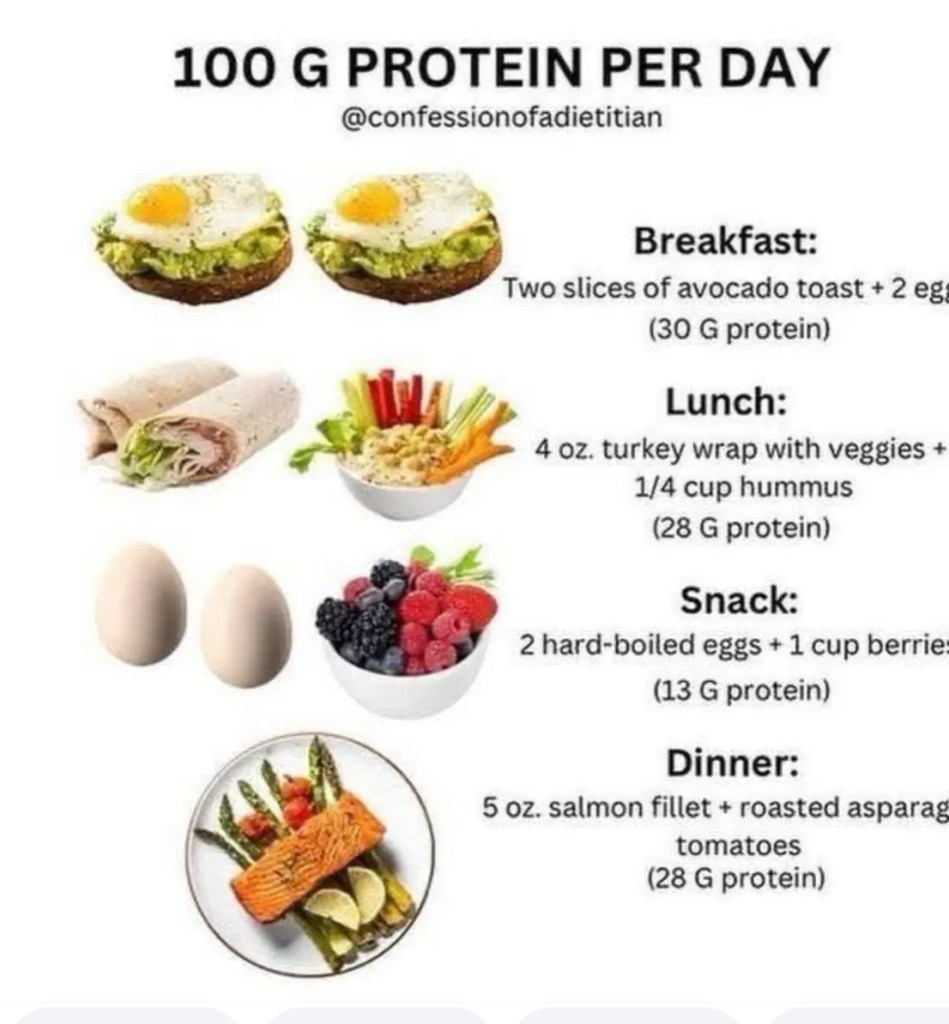
Older gym-goers should think about increasing their protein intake. This is important for all ages but especially the over-60s because of an age-related anabolic resistance to protein. One study showed that protein absorption and assimilation was much slower in those over 60 compared with 20- to 25-year-olds, leading to reduced strength gains. Evidence suggests a minimum of 1 gram of protein per day for every kilogram of bodyweight is a good starting point as you age.
This article was amended on 3 March 2025 to clarify that “a minimum of 1 gram of protein for every kilogram of bodyweight” is a per day figure and that muscle-strengthening activities are now recommended by the UK’s chief medical officer for all adults at least twice a week, not just for those aged 19-64.