Lots of people have been cooking as a way of relieving the boredom of lockdown and my mate Ian has been making different breakfast dishes.
So when I came across this article I wondered if it would have some breakfast options to intrigue him?
I dont know much about Polish food.
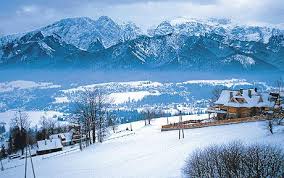
My one and only trip to Poland was to Zakopane for new Year.
We went with Steve and Kathy, their son, his wife, who is Polish and a gang of their friends and i have to say I loved it.
It had snowed so we could mess about on Skis, had a try at snow boarding ( we were rubbish though the kids all took to it instantly) but spent most of our time walking around exploring the local area, eating and drinking beer and Vodka.
We did have a ride on a a sleigh drawn by two of the smelliest flea bitten old horses I’d ever seen and they covered us in rugs that smelt even worse. It was so cold that we wrapped these vermin infested sheets around us without complaint.
We spent hours on a plastic tray which we used as a Tobogan screaming down a slope with several hundred others.
The only negative memory I have is needing the toilet really badly and not being able to find one. I wandered off into the wilderness like Titus Oates muttering these heroic words.
” I may be gone for some time.” The rest I’ll leave to your imagination.
However, one of the best things about Zakopane was the BBQ pits which were in doors, usually in the middle of a bar. They would burn logs and when the flames had died and there was just hot ash, they would load up metal grills with a selection of meats and a huge range of sausage which they cooked to perfection.
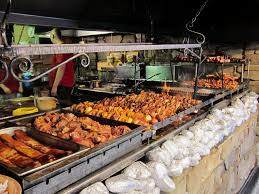
The smell was amazing but the taste, boy that was special.
I see a lot of Polish shops around these days but I have to admit to being fairly ignorant of Polish food and culture.
So when i saw the article below (on CNN news web site of all places) I thought it would be fun to share it with you guys
I’m not suggesting you try them all in fact, some of the ingredients sound positively horrendous, but there might be one recipe that takes your fancy.
If nothing else, it might inspire you to go into a Polish shop and see what it has to offer.
Interestingly there were loads of spelling mistakes (as well as grammar and punctuation) which is surprising for a prestigious organisation like CNN so please excuse this as I did try to correct them but I got bored.
If Polish cuisine were to be described in just one word, “heartfelt” would perhaps be the most fitting choice. We’re talking mind-blowingly delicious, wholesome dishes served up in generous portions.Some of the Central European country’s much-loved recipes date back centuries, and while many have evolved considerably over the years, they’ve all retained Poland’s long-standing culinary values.Of course, the best way to sample Polish food is to visit the country and try its many restaurants, cafes, milk bars and street food stands.While it may be a little while for most before traveling here is an option, its always good to be prepared.From pierogi to bigos, here are 15 essential dishes to try in Poland.
Zurek
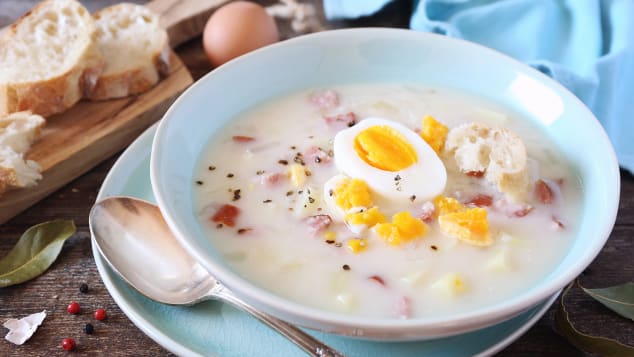
This fermented soup made with sour rye flour is the definitive Polish comfort food. Shutterstock Zurek is the perfect Polish comfort food.At first glance, it might seem like just an ordinary fermented rye soup, but Zurek is regarded as something of a national treasure by the Polish.As is the case for almost all nation-defining meals, each family tends to champion its own Zurek recipe.While there are many regional variations of the dish, the most recognised version consists of sour rye flour with potatoes, plenty of vegetables and lots of meat.The centuries-old soup is also usually served with a hard boiled egg. Be sure to try Zurek w chlebie, which is essentially the same soup served in bread. Popular with locals, Smakolyki Restaurant in Krakow serves fantastic Zurek in a cozy atmosphere. Smakolyki, Straszewskiego 28, 31-113 Kraków; +48124303099 Related content The world’s 50 best foods
Flaki
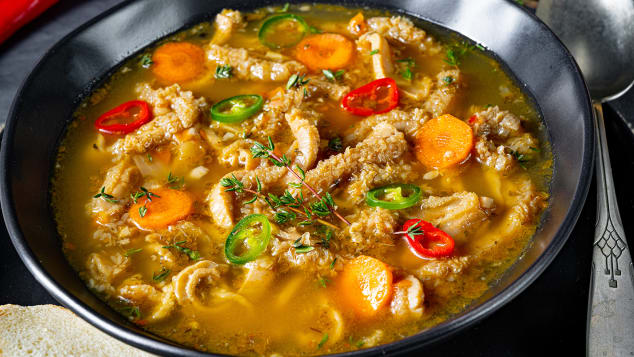
Flaki was thought to be Poland’s one-time King Jogaila’s favorite dish. Shutterstock The Polish version of a popular beef tripe soup, Flaki might not sound hugely appetising, but it’s very significant to the country.Although it’s not exclusive to Poland — similar recipes can be found in neighboring Ukraine, Belarus and Germany — the soup has been popular here since the 14th century and was said to be the favourite dish of Poland’s King Jogaila. Not only does Flaki offer some insight into the rustic roots of Polish cuisine, it also proves the edible lining from the stomach of a cow can form part of an enjoyable meal if cooked in the right way.For Warsaw’s version of Flaki, head to the tiny but locally famous, Pyzy, Flaki Gorace! in the Praga neighborhood. Pyzy, Flaki Gorace!, Brzeska 29/31, 03-739, Warsaw; +48606294499Related content 11 great places to visit in Lower Silesia, Poland
Bigos
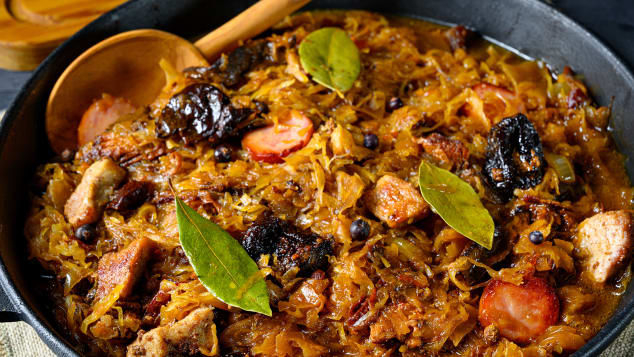
A much-loved Polish stew made from sauerkraut, meat and a variety of vegetables. Shutterstock One of Poland’s most loved foods, Bigos consists of a combination of three ingredients. The first is sauerkraut — the longer it’s cured the better.Then comes the meat, usually beef and/or pork, although game meat is also an option. The more types of meat used, the heartier the taste.Finally, fresh shredded cabbage along with a variety of vegetables completes the simple magic of this iconic Polish stew.Challenge the chef to make you the best bigos at exceptional Stol na Szwedzkiej in Wrocław, where there’s no menu and only four tables. Stol na Szwedzkiej, Szwedzka 17A, 54-401 Wrocław; +48791240484
Pierogi
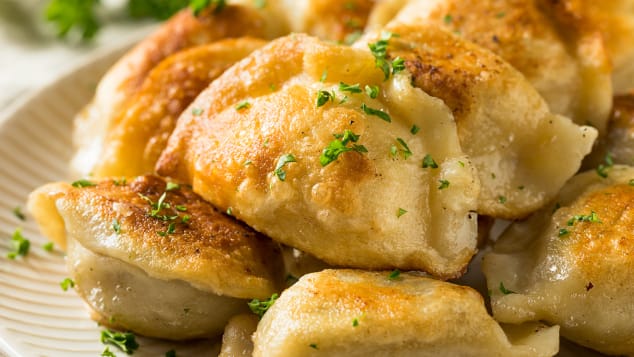
Pierogi are filled dumplings containing either meat, vegetables, cheese, fruit or chocolate. Shutter stock Pierogi is undoubtedly Poland’s most famous and simple comfort food. But after tasting one of these delicious filled dumplings, you’re likely to find yourself craving more. Perogis can be cooked or fried; stuffed with meat, vegetables, cheese, fruit, chocolate; accompanied by a sour cream topping or just butter.From street food spots to fancy restaurants, they can be found pretty much everywhere in Poland.Enter a true kingdom of pierogis at Gdansk food institution Pierogarnia Mandu, which serves more than 35 varieties. Pierogarnia Mandu, Elżbietańska 4/8, 80-894 Gdańsk; +48583000000
Czernina
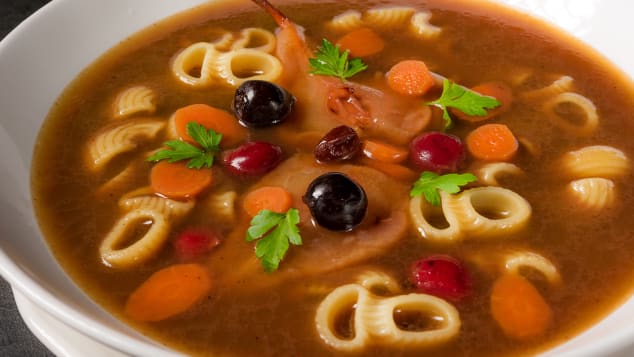
This soup made from duck blood was previously used to either accept or reject marriage proposals. Shutterstock Made with duck blood and a blend of sugar and vinegar, this sweet and sour soup has very strong associations with Polish culture.Up until a few centuries ago, if a man asked for his beloved’s hand in marriage, the shade of the czernina served to him by the bride’s family would answer his question. Golden-colored czernina stood for “yes,” while the black version of the soup signified a negative outcome. Fortunately, diners can now enjoy czernina in all of its regional varieties without having to worry about what the colour means.Related content Poland’s most beautiful places
Tatar
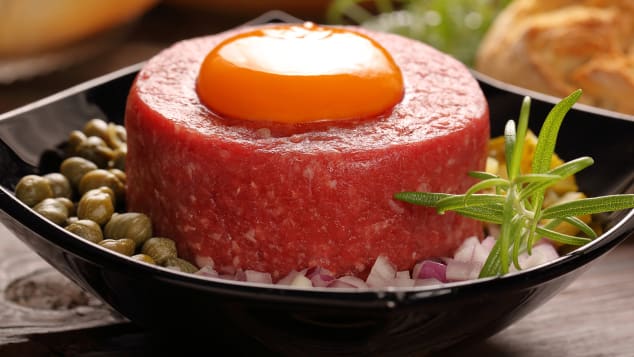
Similar to steak tartare, this appetiser is made of minced meat mixed with onions and egg yolk. Shutterstock Consisting of raw minced beef, this delicious Polish appetiser’s origins can apparently be traced to Mongolia, having been introduced to Europeans in the medieval period.However, Poles love this variation of steak tartare and often start their meal with it, savouring the raw perfection of minced meat mixed with onions and egg yolk. Get a fine dining kick at Krakow’s central Szara Ges w Kuchni, where the deer and smoked mangalica tatar is simply a work of culinary art.Szara Ges w Kuchni, Rynek Głowny 17, 31-008 Krakow; +48124306311
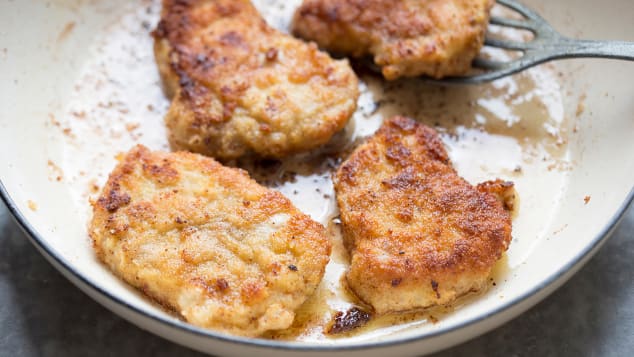
Kotlet schabowy
Kotlet schabowy — a breadcrumbs-coated cutlet made from pork. Shutterstock Viennese schnitzel has a serious competitor from the north — kotlet schabowy — although everyone in Poland just calls it schabowy. But the main difference between this breadcrumb-coated cutlet and the popular Austrian dish is that schabowy is made from pork.Although it can be found in most national restaurants, you can get a truly authentic one at any bar mleczny, otherwise known as a milk bar.These self-service cafeterias provide traditional Polish dishes at affordable prices in a relaxed atmosphere.For good and affordable schabowy, head to Poznan’s Schaboszczak od Dziadka, where the portions are enormous and the prices are low. Schaboszczak od Dziadka, Szkolna 7, 61-832 Poznan; +48883093179
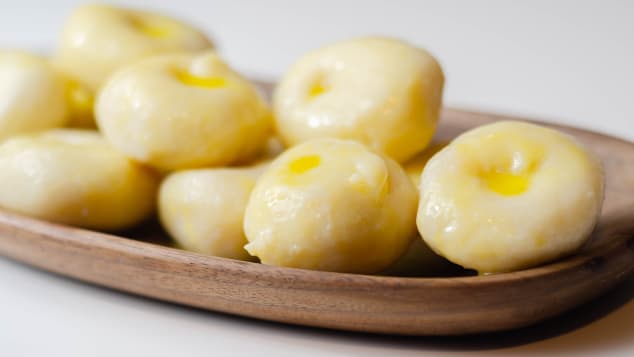
Silesian kluski
These tasty potato dumplings with a hole in the centre are one of the country’s most popular side dishes. Shutterstock Originally from the Silesian Voivodeship (or wojewodztwo slaskie) of Poland, these cooked potato dumplings with a hole in the middle are among the country’s most popular side dishes.While they’ve gained universal acclaim over the years, the Silesia holds the most mouthwatering kluski by far. Beer and kluski go well together, and local brewery Browar Mariacki in Katowice is a great place to sample this pairing. The traditional Silesian rolada, a beef roll served with kluski, is hard to beat. Browar Mariacki, Mariacka 15, 40-014 Katowice; +48327080878
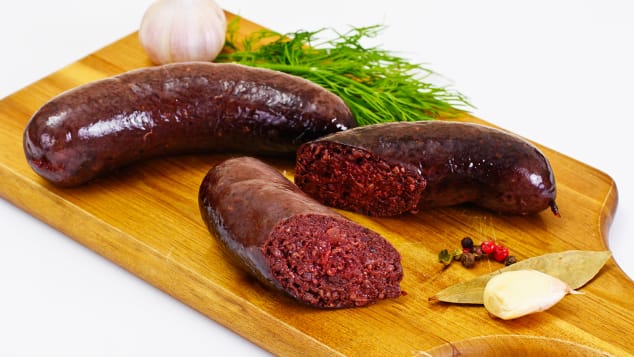
Kaszanka
Sausages containing pig’s blood, pork offal and buckwheat. Shutterstock Blood has a special place in Polish kitchens and kaszanka is a great example of this.Although the ingredients for this sausage might seem unusual, their usage is relatively standard in central and eastern European cuisine. Kaszanka is made from a curious melange, including pig’s blood, pork offal — skin, fat, liver and skin combo — and buckwheat, which is stuffed in the pork’s intestine.There’s no better place to try kaszanka than a restaurant where the buckwheat is king. Zakopane’s Dobra Kasza Nasza serves it well, along with many other buckwheat-based dishes.Dobra Kasza Nasza, Krupowki 48, 34-500 Zakopane; +48791523245Related content 50 of the world’s best desserts
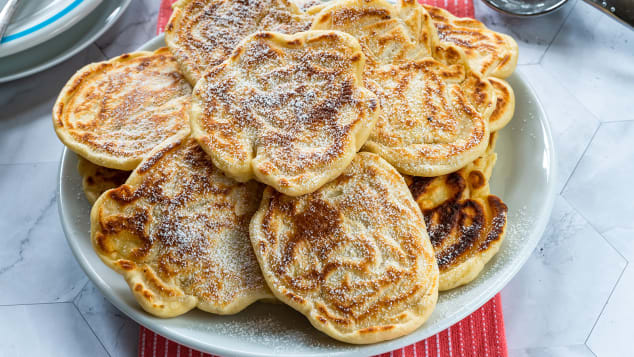
Racuchy
Racuchy — Polish sweet treats that look just like pancakes. Shutterstock When it comes to pleasing those with a sweet tooth, Poland has no shortage of good foods to offer. One of the best is racuchy, the pancake’s close relative.It follows the same winning sugary formula as the popular flat cakes and looks almost identical. Racuchy is often associated with Christmas, as a savoury version of the treat forms an integral part of the festive Polish dinner.Unlike many of the other dishes listed, racuchy isn’t easy to find in restaurants, but many local families prepare them at home.For the best racuchy in Katowice, head straight to Zurownia, a cozy restaurant serving Silesian cuisine. The racuchy here is served with apple mousse. Zurownia, Ligonia 16, 40-036 Katowice; +48535084666
Placki ziemniaczane
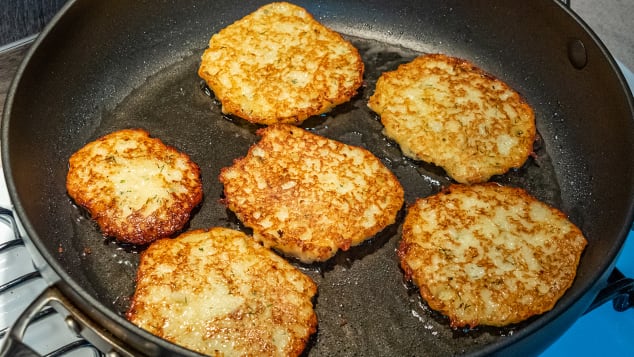
Polish families used potato pancakes as a substitute for bread during tough times. Shutterstock A list of top Polish cuisine would not be complete without these potato pancakes.Thousands of Polish families relied on placki ziemniaczane as a replacement for bread, a scarcity during Poland’s economic hardships, and they’ve since become very important to the country’s culinary tradition.Placki ziemniaczane is often topped with meat sauce, sour cream or goulash.Those who visit the picturesque spa town of Krynica Zdroj, positioned in the Beskid mountains, can opt for a placki ziemniaczane tasting session at Karczma Cichy Kacik, a local culinary institution. Karczma Cichy Kacik, Sądecka 2, 33-380 Krynica-Zdroj; +48184712319
St. Martin’s croissant
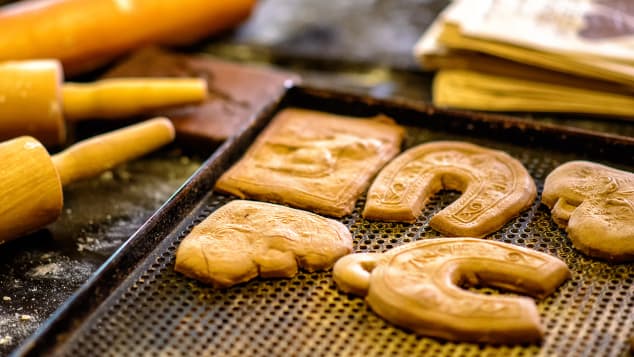
St. Martin’s croissants have been added to the register of protected traditional specialties. Shutterstock Not many foods can lay claim to having special legislative protection stating they only be produced in a designated area.In 2008, the European Union added this mouthwatering horseshoe-shaped croissant with white poppy seed filling to the register of protected traditional specialties, cementing St. Martin’s croissant’s legendary status among Polish foods even further.With roots dating back to the 19th century, the delicious pastry originates from the western city of Poznan, and is one of its most well known culinary symbols.Visitors can learn all about the history of the St. Martin’s croissant, as well as tuck into one, at the Poznan’s Croissant Museum and Experience.Poznan Croissant Museum and Experience, wejscie od, Klasztorna 23, 61-779 Poznań; +48690077800

Torun’s gingerbread
Freshly baked gingerbread from the Old Town of Torun. Shutterstock The scent of freshly baked gingerbread is always in the air in the beautiful UNESCO-protected Gothic Old Town of Torun.In fact, the Polish rarely utter the word “gingerbread” without referencing the capital of its production.Torun has been proudly producing this tasty baked delicacy, made according to a 700-year-old recipe, for centuries.The fact that there are two institutions devoted to gingerbread production here further demonstrates its significance.One is the informative Museum of Torun Gingerbread, the other the interactive Living Museum of Gingerbread. In this city, there’s no such thing as too much gingerbread.Museum of Torun Gingerbread, Strumykowa 4, 87-100 Torun; +48 56 656 70 87 Living Museum of Gingerbread, Rabianska 9, 87-100 Torun; +48 56 663 66 17Related content Mac and cheese? Noodle soup? Top chefs share their go-to comfort foods
Makowiec
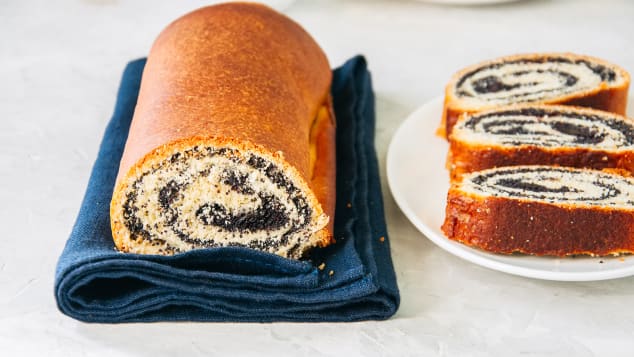
Makowiec — a roll of sweet yeast bread with a filling of poppy seed. Shutterstock This extremely delicious pastry takes pride of place at almost every table in Poland during the Easter and Christmas period.The unpretentious treat, firmly associated with holidays, contains just the right amount of sweetness, and has a distinct poppy seed flavour.You can find makowiec in a variety of forms in the bakeries, coffee shops and cafes all around the country.
Oscypek
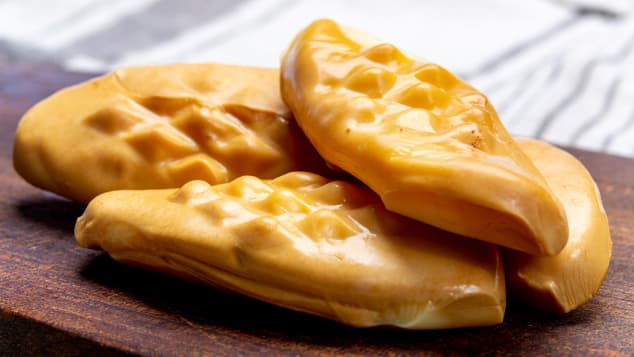
This smoked cheese variety is exclusively made by traditional shepherds and cheesemakers in the Tatra Mountains. Shutterstock Created exclusively in Poland’s Tatra Mountains, oscypek is a type of a smoked cheese variety made of salted sheep’s milk.Only gondoliers are allowed to sail gondolas in Venice, and only “bacas,” traditional shepherds and Tatra cheesemakers, can make oszczypek. The cheese can be found almost everywhere in the country, from the resort town of Zakopane, otherwise known as Poland’s “winter capital,” to Krakow, the capital of Lesser Poland Voivodeship, where the Tatras are found.Grilled oscypek with cranberry jam, available from most street stands in Poland, is essential to try.
Having read this through I am some what confused by the term ‘ Shutterstock‘.
I dont know what it means or why its used so often. It’s a bit like trying to get the word Shoehorn into every sentence.
Or Penny Mordaunt who used the word ‘Cock’ in her speech to parliament as a dare.
But dont let that spoil your appetite.

