Butter’s back! But can it really be healthy?
Is butter bad for your health, or can it cut your cholesterol and diabetes risk? We speak to the experts to find out the facts.
Whether you spread it on crumpets, crusty bread or new potatoes, most things taste better with butter.
But until recently, our enjoyment was tinged with a bitter aftertaste – guilt. After all, it’s loaded with saturated fat that’s not only bad for your waistline, but a disaster for heart health, right?
However, butter is flavour of the month again.
Health influencers on Instagram and TikTok have been adding it to their flat whites and eating sticks of butter as a snack, claiming it increases energy and improves skin. While it’s easy to laugh off social media crazes, a new scientific study seemed to back them up.
What does the new research on butter say?
In June, scientists at Boston University found that eating 5g of butter a day reduced the risk of Type 2 diabetes by almost a third, and increased levels of good cholesterol (HDL) compared to margarine
They even found that margarine raised the risk of diabetes by 40% and the risk of heart problems by 30%. (It is worth noting, though, that margarine may only have fared worse than butter because the study ran from the 1970s until 2014, a time when margarines were loaded with trans fats, which are even worse for heart health than saturated fat.)
However within weeks, a report was published by nutritional scientists at Harvard University that threw shade on butter again
Researchers tracked the health of 221,054 people from 1990 to 2023, looking at associations between butter, plant-based oils and total mortality.
The results were stark.
The highest butter intake was associated with a 15% higher risk of death compared to the lowest intake.
In contrast, the highest intake of plant oils (rapeseed, olive oil and soybean) had a 16% lower risk of death, and every 10g daily increase in plant oils was associated with an 11% lower risk of death from cancer, and a 6% lower risk of death from cardiovascular disease.
So where does this leave us?
“Conflicting headlines about butter can be confusing,” says Tracy Parker, nutrition lead at the British Heart Foundation(BHF).
“However, over the last year the evidence behind butter and heart health hasn’t really changed. The evidence around saturated fats increasing blood cholesterol levels is strong. We know that over 50% of butter is saturated fat, with a teaspoon containing 5g of saturated fat, quite a large proportion of the recommended daily amount of 20g for women and 30g for men.”
Most studies around nutrition are an imperfect science, explains Parker, which accounts for the conflicting outcomes.
“They are usually observational, tracking self-reported habits over decades,” she says.
“They can’t prove cause and effect, and instead only give us associations between butter and diabetes or cardiovascular disease (CVD).”
The BHF base their advice on a wide-ranging 2019 Government report on dietary fats, which reviewed 47 previous scientific studies on the subject.
“Their message – and ours – is that high blood cholesterol levels increase CVD, and replacing saturated fat with unsaturated fat lowers blood cholesterol,” says Parker.
In essence, she says: “If you have heart disease and an unhealthy diet generally, then replacing butter with margarine is an easy win.”
Avoiding extremes is key
The flip-flopping of messaging around butter can result in extremes of behaviour, says Elena Rolt, registered nutritionist at health.miro.
“In the 1960s, the US government told people not to eat butter after the publication of the first scientific study which found a link between saturated fat and heart disease,” she explains.
“There was huge fear around butter for the next 30 to 40 years, prompting people to swap to margarine and low-fat products. Over the last couple of years, the narrative has switched to ‘let’s have lots of butter and coconut oil and avoid evil, inflammatory seed oils.’ The truth is somewhere in between.”
What about the argument that butter is a natural food?
In addition to the dialogue around processed seed oils, there is concern around ultra-processed food (UPF) and its detrimental effect on health – another reason why butter is gaining popularity in some quarters.
“There is this growing movement stating that if anything is natural, eg butter, it’s good for us, and if anything is processed, eg margarine, it’s bad for us – this is gaining momentum on the back of fearmongering around UPFs,” says Professor Sarah Berry of King’s College London, and chief scientist at ZOE.
“Yes, we have a huge problem with consuming too many heavily processed unhealthy foods, but the margarines that are now commercially available in the shops are good for us. They contain healthy blends of seed oils which we know can lower cholesterol and improve blood vessel function.
“Lard is a supposedly natural fat, but everyone knows it’s bad for us. The evidence is consistent that butter is not good for heart health because of high saturated fat.”
Butter does contain vitamins and minerals
While there is no arguing with the high saturated fat content of butter, it does have some redeeming qualities.
“Butter contains calcium, and vitamins A, D and E,” says registered nutritionist Alison Bladh.
“Butter made from grass-fed cow’s milk is also high in vitamin K, which, like vitamin D, is essential for bone health. Having these fat-soluble vitamins alongside each other in a matrix containing fat makes them easier for the body to absorb.”
However, this isn’t enough of a reason to eat butter in any volume, says Prof Berry. “If you want to have butter because it tastes good, then a small amount each day is okay. But don’t have it because you believe you are being healthy.
“I choose to have butter on toast because I prefer the taste to spreads. I counter it by using rapeseed oil for cooking, which contains polyunsaturated fat that lowers cholesterol.”
Parker agrees: “If you are not at risk of CVD ( Cardio vascular Disease)and are generally healthy, lightly buttering your toast every morning is unlikely to be a problem.”
What’s the best alternative to butter?
Margarine may not be the tastiest option, but a drizzle of extra-virgin olive oil on your bread, vegetables or jacket potato is delicious and super-healthy.
“There is consistent evidence to show it’s a really healthy oil, rich in monounsaturated fats and polyphenols that act on anti-inflammatory pathways so are really good for heart health,” says Prof Berry.
A study by scientists at the University of Cambridge found that levels of LDL ( bad cholesterol) cholesterol significantly increased when subjects ate 50g daily of butter over four weeks compared to those who had the same amount of extra-virgin olive oil.
How healthy are other full-fat dairy products?
Cheese lovers rejoice. A study in 2021 led by researchers at the University of Cambridge found that links between bad cholesterol and saturated fat are dependent on food source
The scientists found that saturated fats from cheese and yogurt lowered the risk of heart disease, while saturated fats from butter and red meat increased the risk.
How strange is this?
“We know that if the dairy is fermented, such as yogurt and cheese, the fermentation process changes the matrix of the structure such that it doesn’t have the same negative impact on cholesterol,” explains Prof Berry.
What are the best and worst fats for your health?
We’ve ranked some of the most popular fats from best to worst. Find out which to avoid, and see answers to common questions about cooking oils.
Fat is an essential part of a healthy balanced diet and provides several health benefits. It’s also a source of essential fatty acids, which the body cannot produce on its own. Fat helps the body absorb fat-soluble vitamins such as vitamin A, vitamin D, and vitamin E.
But too much fat can be harmful to our health. Some fats are proven to support our health, whilst others may damage it if eaten regularly – so it’s important to choose fats wisely. Here’s the list ordered from best to worst:
Olive Oil
Olive oil contains more monounsaturated fat than any other edible plant oil. This type of fat can help lower LDL (“bad”) cholesterol and raise HDL (“good”) cholesterol.
Kirsten Jackson, consultant IBS dietitian, says olive oil is a heart-healthy choice. She tells Saga Magazine: “There is a myth that when you heat olive oil it turns into a type of fat known as trans fats which are bad for our health, but this is incorrect. Trans fats are only produced in a commercial environment [not through cooking at home].”
Tracy Parker, Nutrition Lead at the British Heart Foundation, tells us: “Unsaturated oils, like olive oil, sunflower oil and rapeseed oil, contain healthy fats that can help lower bad cholesterol and reduce the risk of heart disease.
“Extra virgin olive oil is the least processed type of olive oil and contains more antioxidants, which are linked to better gut and heart health.
“That is not to say you cannot use other types of plant oils as well, as they all have different tastes and may work better in different dishes.”
Research suggests that olive oil may lower the risk of heart disease and stroke due to its anti-inflammatory properties. It is often associated with good heart health, particularly because of its role in the
Nutritional content (per 100ml):
Refined olive oil:
- Energy: 823kcal
- Total fat: 91.4g
- Saturated fat: 13.1g
- Monounsaturated fat: 79.4g
- Polyunsaturated fat: 7.5g
- Salt: 0g
Extra virgin olive oil:
- Energy: 822kcal
- Total fat: 91.3g
- Saturated fat: 13.9g
- Monounsaturated fat: 79.1g
- Polyunsaturated fat: 7g
- Salt: 0g
2: Rapeseed oil
In the UK, vegetable oil is usually rapeseed oil. It is extracted from the seeds of a plant in the cabbage and mustard family, with bright yellow flowers that bloom in the spring.
Tracy Parker explains that rapeseed oil is a relatively good option because it is low in saturated fat – containing the lowest amount of any oil, with just half the saturated fat found in olive oil. Research has shown the risks of a high saturated fat diet.
“Similar to olive oil, it is high in monounsaturated fat. Cold-pressed rapeseed oil is a great choice for everyday cooking. It has sometimes had a bad reputation, especially in the USA, where it is known as canola oil and was historically used in industry. However, oils in the UK undergo strict controls to ensure safety,” Tracy adds.
So, avoid American oil?
Nutritional content (per 100ml):
- Energy: 823kcal
- Total fat: 91.4g
- Saturated fat: 13.1g
- Monounsaturated fat: 79.4g
- Polyunsaturated fat: 7.5g
- Salt: 0g
3: Avocado oil
Image credit: GettyImages/TanyaLovus
A newer, trendy oil for cooking or salads, avocado oil has similar benefits to olive oil.
“It is almost identical to olive oil in terms of its fatty acid profile – both are high in monounsaturated fats. However, avocado oil tends to be more expensive because it’s considered a niche oil and is less widely produced,” says Tracy Parker.
She recommends using avocado oil wisely if you are going to use it. “For everyday cooking, a more affordable healthy oil is fine. Save expensive oils with strong flavours for salads, dips, or marinades.”
Bear in mind that whole avocados will have more health benefits than the oil, as they contain more fibre, vitamins and minerals. For example, you could have avocado on toast, rather than bread dipped in avocado oil.
Nutritional content (per 100ml):
- Energy: 809kcal
- Total fat: 91.4g
- Saturated fat: 16.9g
- Monounsaturated fat: 60.6g
- Polyunsaturated fat: 9.9g
- Salt: 0g
I have found this relatively cheap in COSTCO.
4: Rice bran oil
Extracted from the outer layer of rice, rice bran oil is low in saturated fat and high in monounsaturated fat. It’s popular as a cooking oil for some Asian foods. It has a high smoke point, so is suitable for cooking at high temperatures, and a mild flavour.
Tracy says: “Similar to avocado, olive and rapeseed oil, it’s low in saturated fat and high in monounsaturated fat and is considered a healthy oil to cook with.”
Nutritional content (per 100ml):
- Energy: 813kcal
- Total fat: 92g
- Saturated fat: 21g
- Monounsaturated fat: 39g
- Polyunsaturated fat: 32g
- Salt: 0g
5. Sunflower oil.
Sunflower oil is a popular choice for high-heat cooking, as it has a high smoke point. It’s naturally high in polyunsaturated fats, although you can also get high-oleic sunflower oil, which means it’s made from sunflowers which have been bred to be higher in monounsaturated fat.
Does this include GM modification I wonder?
“All oils, including sunflower oil, should be used in moderation – they are all high in calories, around 100kcal per tablespoon. There is also no need to worry about cooking with oils as home cooking temperatures aren’t high enough to spoil the oil.
Just make sure not to reuse the oil after cooking,” says Tracy.
Nutritional content (per 100ml):
- Energy: 828kcal
- Total fat: 92g
- Saturated fat: 10.1g
- Monounsaturated fat: 26g
- Polyunsaturated fat: 56.1g
- Salt: 0g
6: Palm oil
Palm oil contains around 50% saturated fat, similar to butter.
Kirsten says: “Many manufacturers opt for using palm oil because their product needs to contain a fat that is solid at room temperature and this is not possible with other oils like olive oil.
“Overall, I wouldn’t recommend that people are cooking with palm oil as it is not as beneficial for health as olive oil, but having the occasional product that contains this type of fat is unlikely to have a negative impact when you are having a balanced diet otherwise.”
Tracy adds: “Palm oil is cheap and often found in many processed foods like snacks and baked goods, so you might be eating more of it than you realise.
“Processed foods also tend to have high levels of unhealthy fats and sugars, which we should eat less of. Limiting these foods can help reduce your intake of palm oil.”
Nutritional content (per 100g):
- Energy: 884kcal
- Total fat: 100g
- Saturated fat: 49g
- Monounsaturated fat: 40g
- Polyunsaturated fat: 9g
- Salt: 0g
7. BUTTER
Butter is mostly made up of saturated fat, the type which can raise cholesterol. Although it’s not the worst on our list, it’s not an ideal choice.
Tracy says: “Especially if you have high cholesterol, the simple swap from butter to using an unsaturated oil or margarine would be better for your health. If you’re otherwise healthy, a bit of butter on your toast is not going to make a big difference. If you use a lot of butter in your diet, then it’s wise to make a change to using an unsaturated fat such as olive oil, rapeseed or sunflower oil or spread.”
Spreadable butter is marginally healthier, because it usually has vegetable oil added, but an unsaturated spread would be a better option for your heart.
Nutritional content (per 100g of slightly salted butter):
- Energy: 739kcal
- Total fat: 82g
- Saturated fat: 52g
- Monounsaturated fat: 21g
- Polyunsaturated fat: 3g
- Salt: 1.2g
8: Coconut oil
Despite its reputation as a “healthy” fat, coconut oil is approximately 85% saturated fat.
Tracy says: “It contains more saturated fat than butter, so excessive intake should be avoided by those with high cholesterol.
“If you like the taste, it is fine to use every now and then, but use unsaturated oils as an everyday choice.”
Nutritional content (per 100ml):
- Energy: 767kcal
- Total fat: 92.5g
- Saturated fat: 86.6g
- Monounsaturated fat: 6.3g
- Polyunsaturated fat: 1.7g
- Salt: 0g
Bad for you.
All of these are solid white fats obtained by rendering fatty tissue from animals. Lard is usually from pigs. Dripping, tallow and suet are usually from beef, though they can be from mutton or lamb. Suet is the fat from around an animal’s kidneys. Tallow is technically the fat from around the organs, although in the US the term tallow is used interchangeably to describe dripping or suet.
These fats are higher in total fat content than butter.
Tracy explains: “Like butter, these are hard animal fats high in saturated fat, which can increase cholesterol levels. It is best to use sparingly.”
Although some people claim that lard is good for you, because of the mix of fats it contains, there’s very little evidence to show it has heath benefits in humans, whereas there is some evidence linking it to worse health outcomes.
Nutritional content (per 100g of lard):
- Energy 898 kcal
- Total fat 100g
- Saturated fat 44g
- Monounsaturated fat 41g
- Polyunsaturated fat 11g
- Salt 0g
Nutritional content (per 100g of beef dripping):
- Energy 900kcal
- Total fat 100g
- Saturated fat 57g
- Monunsaturated fat 36g
- Polyunsaturated fat 3g
- Salt 0g
Are seed oils bad for you?
Seed oils are oils extracted from seeds. In the UK, the most common are rapeseed (known in the US as canola oil, it’s often sold as vegetable oil in the UK) and sunflower oil. You will also find soybean, corn, grapeseed, rice bran and safflower in many products.
Seed oils have recently had a bad reputation among some celebrities, particularly in the United States, because of their omega-6 content and supposed link to inflammation.
But there’s no solid evidence to support this, says Tracy.
The American Heart Association also agrees that there’s no need to worry.
Tracy says: “Seed oils often get a bad reputation because of their omega-6 content and supposed link to inflammation, but there’s no solid evidence to support this.
“Omega-6 and omega-3 are both essential fatty acids, meaning we need to get them from our diet. Both types of fats are good for heart health, and it’s important to have a balance between them.
“Most seed oils contain a mix of both omega-6 and omega-3 fats. Like all oils, they should be used in moderation.”
Another concern of seed-oil sceptics is how the oil is produced. More processed forms of oil may use chemicals such as hexane to extract the oil, but these chemicals are removed in the finished product.
The processing can also help to remove substances that can make the oil go rancid or cause it to smoke at high temperatures.
Are all unsaturated oils the same?
Variety is the spice of life when it comes to unsaturated oils.
Tracy says: “All unsaturated oils are good for you, but they contain different types of healthy fats. Some oils, like olive, rapeseed, and avocado oil, have more monounsaturated fats. Others, like sunflower, corn, and walnut oil, have more polyunsaturated fats.
“Each type offers slightly different health benefits, so it’s good to include a variety in your diet.”
Are more expensive cold-pressed oils better for you?
Cold-pressed oils can contain higher levels of antioxidants, and won’t contain any traces of the chemicals that are sometimes used in industrial processing of oils. ( I thought this article suggested these were completely removed)?
But they are a more expensive choice, and any unsaturated oil, such as inexpensive sunflower or vegetable oil, is likely to be a more heart-healthy option than butter or palm oil.
Kirsten says: “Cold-pressed oils are processed without heat, and heat can break down some of the nutrients in foods so a cold-pressed oil is higher in many beneficial components, such as oleic acid which is a type of monounsaturated fat that reduces levels of bad cholesterol and increases levels of good cholesterol. It also acts as an antioxidant.”
So in summary despite all the evidence on line, provided by Professors, nutritionists, Doctors and cardiologist ( I keep the information in my saved files) it seems the British Heart foundation don’t agree.
Butter in anything other than small portions is bad for your heart because it increases Cholesterol.
Processing oils doesn’t apparently cause a problem.
Rape seed oils are apparently better for your health that Butter or Coconut Oil, despite the hype.
It seems the establishment aren’t prepared to change their recommendation’s so if we accept they know what they are talking about, we have to listen to their advice.
For now at least I will stick with my spreadable Margarine (even though it is processed ) plus extra virgin olive oil and only use other fats like Coconut oil occasionally.
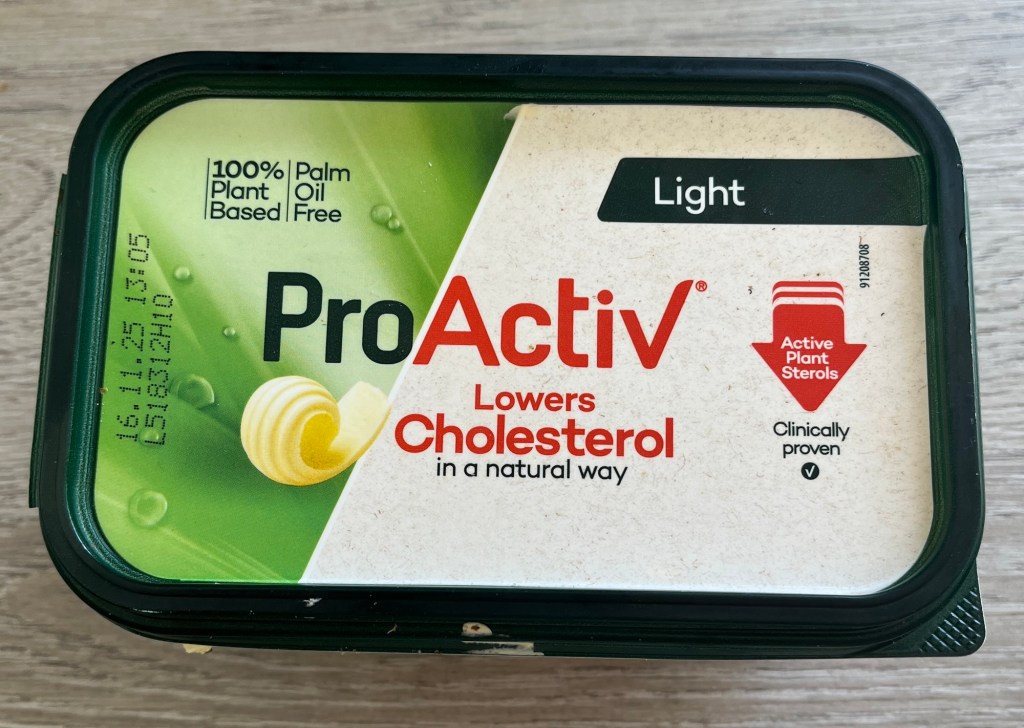
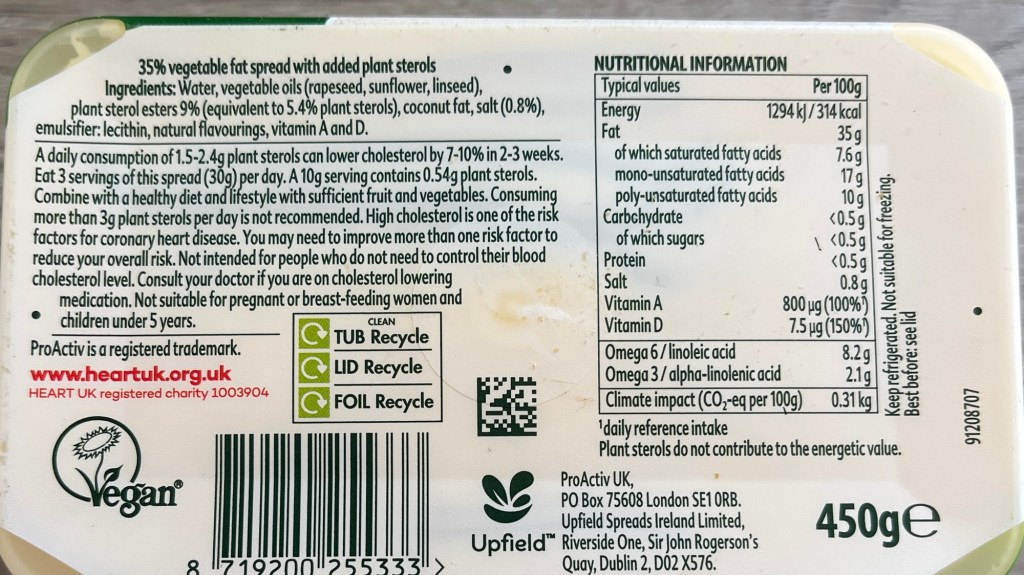
Pity, I thought for a minute life had gotten better.

